

International. The global market for new energy vehicle (NEV) engine assembly and test lines maintains an accelerated growth trajectory, driven by the expansion of electric mobility and industrial automation.
According to a recent market report, this segment reached a value of USD 1,000 million in 2024 and is projected to reach USD 2,457 million by 2031, with a compound annual growth rate (CAGR) of 13.7% during the forecast period.
In 2024, the market registered the installation of approximately 286 production lines globally, with an average price close to USD 3.3 million per unit, which reflects the high level of technology and integration that characterizes this type of industrial solutions.
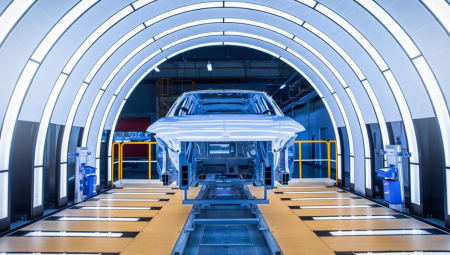
Electric vehicle motor assembly and test lines are designed for the automated production of traction motors and integrated electrical systems used in battery electric vehicles (BEVs), plug-in hybrids (PHEVs), and extended range electric vehicles (EREVs). These platforms allow the comprehensive verification of the performance of the motor and the "three-in-one" systems, which integrate motor, inverter and gearbox, guaranteeing high standards of efficiency, durability and consistency in series production.
The production process encompasses critical stages such as stator winding, rotor assembly, laser welding, dynamic balancing, electrical and insulation testing, noise and vibration (NVH) testing, thermal verification, as well as torque and efficiency testing. This set of operations positions these lines as key equipment within the electric vehicle value chain, with a direct impact on the performance, safety and autonomy of the units.
In terms of supply chain, the upstream segment includes suppliers of components and technologies such as ABB, KUKA, Yaskawa, Keyence, Siemens and Schneider Electric, among others, while system integration falls to specialized companies such as Dürr, Comau and ATS. The main end-users are electric vehicle manufacturers such as BYD, Tesla, Geely, NIO and SAIC, as well as electric powertrain suppliers such as BorgWarner and Nidec.
The report also warns that the tariff policies implemented by the United States in 2025 could introduce an environment of greater uncertainty for the market, with potential effects on global competitiveness, the reconfiguration of supply chains, and regional economic relations.
By region, Asia-Pacific and North America are emerging as the main growth drivers towards 2031, supported by investments in advanced manufacturing and the strengthening of local production of electric vehicles. On a competitive level, manufacturers such as Bosch Rexroth, Comau, KUKA, ATS Corporation and PIA Automation account for a significant share of the market, with the top three suppliers accounting for a significant proportion of global revenues.
With estimated gross margins between 25% and 40% and an average production capacity of around 10 lines per year per facility, the NEV motor assembly and test line market is consolidated as a strategic segment within the global transition to electric mobility.
The full study can be found at this link.