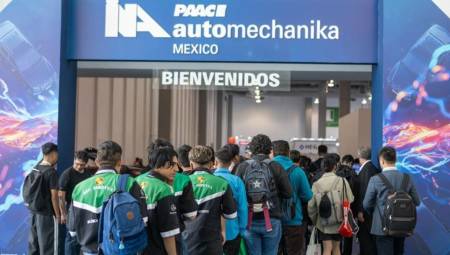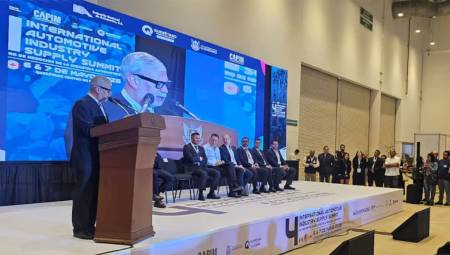


Mexico. With a call to strengthen the national supply base before the next revision of the USMCA in 2026, the National Auto Parts Industry (INA) inaugurated the XXIII edition of the International Congress of the Automotive Industry in Mexico (CIIAM).
During the opening, the INA highlighted five key pillars for regional strengthening: trade, integration, proximity and interconnectivity, employment and regulatory certainty. The association warned of the risk of falling into a "metaverse of tariffs" that could slow down investments and reduce the competitiveness of the sector.
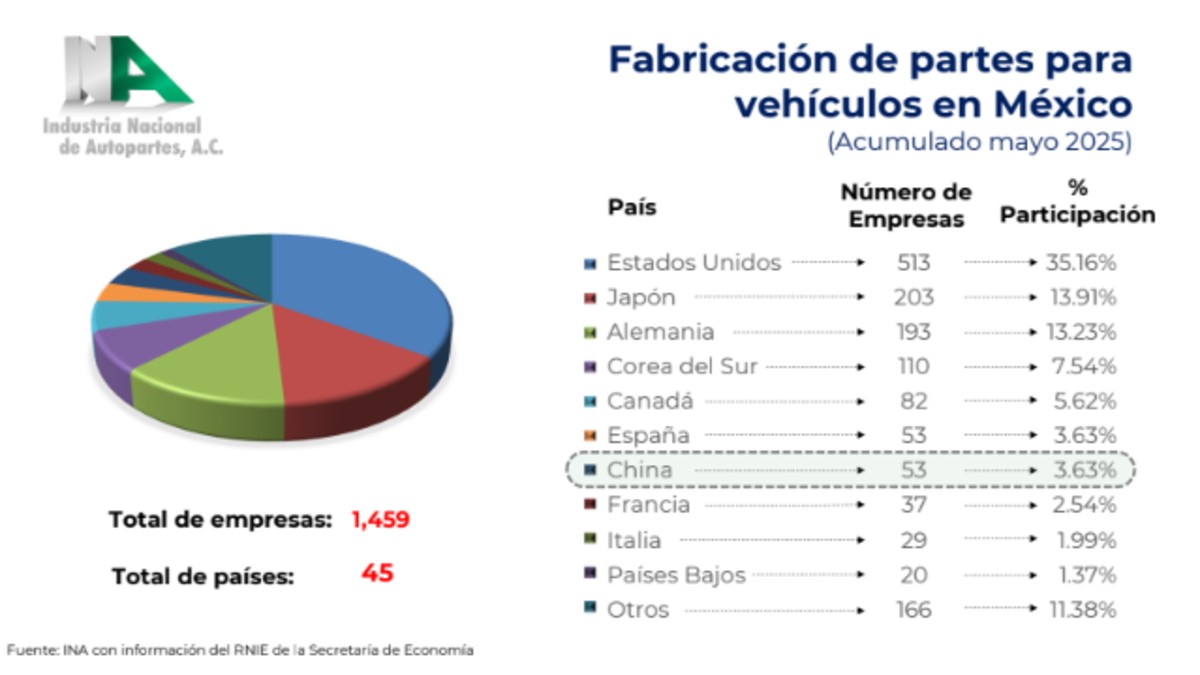
According to data from the agency, between July 2024 and June 2025, 83% of Mexican exports were destined for the United States, reaching a value of 137 billion dollars in auto parts. Currently, North America produces 15 million vehicles and 460 billion dollars in auto parts per year, reflecting the level of integration achieved.
"The co-production is deep: 74% of the inputs for vehicles made in Mexico come from the United States; only 3.5% depend on Asia. The revision of the USMCA in 2026 should strengthen suppliers, not slow down investments," the INA said.
Within the framework of CIIAM, the INA and the International Finance Corporation (IFC) of the World Bank recognized 16 anchor companies—including Lear, Rassini (BYPASA), BorgWarner, Bosch, Bendix, Gestamp, Marelli, Yazaki, and New Concept Technology—for their participation in the Supplier Development Program (PDP).
This program has benefited more than 50 Mexican SMEs with training, financing and new business opportunities, promoting their integration into global value chains.
During the analysis tables, leaders of the sector agreed on the need to advance on six strategic fronts:
- Implementation of digital customs and more agile processes to reduce border crossing times.
- Access to competitive energy and world-class logistics infrastructure.
- Promotion of innovation and public-private collaboration towards sustainable mobility.
- Consolidation of Tier 2 and Tier 3 suppliers, reducing dependence on Asian components.
- Nearshoring strategies that allow regional content to be raised to 70%.
- Digitalisation and traceability of the value chain through platforms such as Catena-X.
The CIIAM 2025 brought together representatives of the Ministry of Economy, the National Customs Agency of Mexico (ANAM), CONCAMIN, MEMA, AMIA, AMDA, ANPACT, COMCE, as well as diplomatic delegations and national and international business leaders.