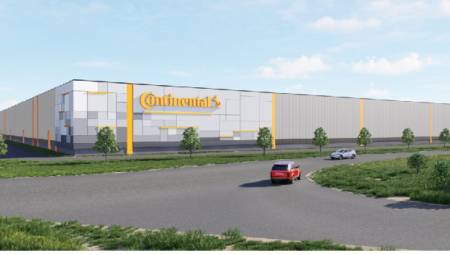


United States. The company announced the construction of a new highly automated warehouse for finished products in Mount Vernon, Illinois, United States, as part of its strategy to grow and strengthen logistics in North America.
The organization plans to invest around $76 million in the project, which is scheduled to start operating in 2027. The facility will be designed primarily to meet the growing demand in North America, as well as improve customer service and support levels.
The warehouse will occupy an area of more than six football fields and will have storage capacity for approximately 500,000 passenger vehicle tires. Construction will begin in the summer of 2026.
"Our new, highly automated finished product warehouse underscores our growth ambitions in North America," said Tansu Işık, CEO of Continental Tires Americas. "The new facility will enhance our ability to serve customers more quickly and flexibly, while strengthening our overall distribution network in the region."
Nik Pearce, Continental's tire plant manager in Mount Vernon, said: "This investment is a clear signal for the future of our Mount Vernon plant. It enhances our capabilities, further modernizes our operations, and makes plant logistics more efficient. At the same time, it strengthens our operations locally and creates new development opportunities for our employees."
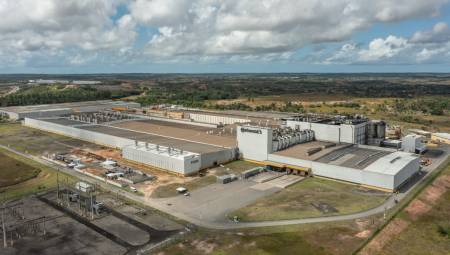
The Mount Vernon plant is Continental's largest tire facility in the United States and represents a key part of the company's production and supply network in the Americas. Tires have been manufactured at this site for more than 50 years. The plant was inaugurated in 1974 and acquired by Continental in 1987.
Currently, the facility produces tires for passenger cars, light trucks, and commercial vehicles. The industrial complex covers more than 320,000 square meters and has a production capacity of approximately 11.4 million tires per year. More than 3,500 employees currently work at the plant.
Continental continues to invest in the digitalization and automation of its global manufacturing operations, which span 19 tire plants in 16 countries. The company's strategy focuses on the development of new technologies, alternative materials, environmentally friendly production and continuous improvements in logistics efficiency.