
Select your language

Tariffs could raise prices for U.S. consumers and affect the automotive industry

United States. President Trump has recently revealed his plans to impose significant tariffs on imports from Mexico, Canada, and China starting January 20, 2025.

Through his Truth Social account, Trump announced that he would impose a 25% tariff on imports from Mexico and Canada, and an additional 10% on those from China, as part of his strategy to curb illegal immigration and drug trafficking.

However, these trade measures could have serious consequences for U.S. consumers and businesses, trade experts and auto care industry representatives have warned.

The Auto Care Association, which brings together more than 500,000 companies in the vehicle repair and maintenance sector, said the proposed tariffs could significantly increase the prices of spare parts and other related products.

- Advertising -

"The tariffs are not paid by exporting countries, but the additional costs are passed on directly to U.S. consumers, which could lead to increases in the prices of vehicle repairs and maintenance, an even heavier burden in times of high inflation," the organization said.

Mexico and Canada are key trading partners for the U.S. automotive industry, together accounting for 58% of auto parts imports and 76% of auto parts exports in 2023. Among the products most affected by the tariffs are crucial components such as brake systems, piston engines, catalytic converters and suspension parts, the price of which could rise sharply due to the new levies.

The price of catalytic converters, for example, could see an increase of up to 25% due to the additional tariffs. With current prices ranging from several hundred to thousands of dollars, U.S. vehicle owners would face significantly higher costs to make essential repairs.

The impact would not be limited to consumers alone. Businesses, especially small and medium-sized ones, would also feel the effects. Auto Care Association warned that small businesses could face cash flow issues, payment delays and reduced inventories due to the additional costs of tariffs.

In addition, companies will need to bear the cost of tariffs upfront, which could divert financial resources that would otherwise be used for new investment and expansion.

Trade between the U.S., Mexico, and Canada is critical to the stability of the U.S. auto industry. The Agreement between the Three Countries (USMCA) has helped reduce trade barriers, facilitating a continuous flow of intermediate inputs and finished goods across borders.

Auto Care Association stressed that any measure that disrupts this supply chain could result in delays in vehicle repairs and maintenance, which would put the safety of drivers at risk.


No comments

• If you're already registered, please log in first. Your email will not be published.

Leave your comment

In reply to Some User
INA PAACE Automechanika Mexico 2026 announces the largest edition in its history

INA PAACE Automechanika Mexico 2026 announces the largest edition in its history

Mexico. The INA PAACE Automechanika Mexico 2026 fair is preparing to hold the largest and most innovative edition in its history, consolidating itself as the main automotive aftermarket meeting in...

Querétaro strengthens its strategic role in the regional automotive chain

Querétaro strengthens its strategic role in the regional automotive chain

Mexico. The International Automotive Industry Supply Summit (IAISS) 2026 concluded at the Querétaro Congress Center, consolidating itself as one of the most relevant meetings for the automotive and...

Continental to build highly automated warehouse in Illinois

Continental to build highly automated warehouse in Illinois

United States. The company announced the construction of a new highly automated warehouse for finished products in Mount Vernon, Illinois, United States, as part of its strategy to grow and...

Frankfurt's first traffic light turns 100 and marks the way towards connected mobility

Frankfurt's first traffic light turns 100 and marks the way towards connected mobility

Germany. A century ago, Frankfurt installed its first traffic light, a milestone that marked the beginning of electric traffic control and that today reflects the evolution towards smarter,...

New repair solution for electric power steering avoids complete rack replacement

New repair solution for electric power steering avoids complete rack replacement

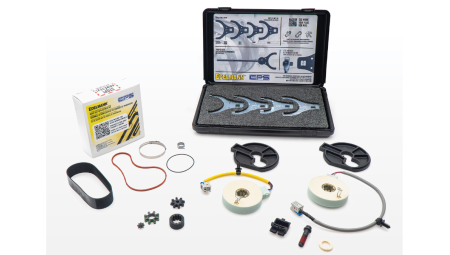
United States. Plews & Edelmann has introduced a new repair category for electric power steering (EPS) systems, developed to prevent complete rack and pinion replacement in millions of modern...

AMR 2026 closed successfully driving innovation in the automotive market

AMR 2026 closed successfully driving innovation in the automotive market

China. The 74th edition of the Auto Maintenance and Repair Expo 2026 successfully concluded on April 15 in Beijing, consolidating itself as one of the main platforms for the automotive...

Global automotive lighting market to exceed $58 billion by 2036

Global automotive lighting market to exceed $58 billion by 2036

International. The global automotive lighting market continues to consolidate itself as a strategic component within vehicle development, driven by electrification, digitalization and the growing...

ACPN opens call for applications for Leadership 2.0 scholarship aimed at aftermarket professionals

ACPN opens call for applications for Leadership 2.0 scholarship aimed at aftermarket professionals

United States. The Aftermarket Content Professionals Network (ACPN), a community of the Auto Care Association, announced the opening of the call for applications for its Leadership 2.0 scholarship,...

Continental celebrates 20 years of tire production in Camaçari, Brazil

Continental celebrates 20 years of tire production in Camaçari, Brazil

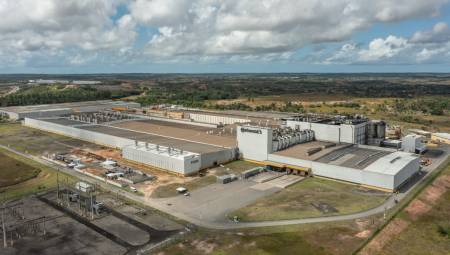
Brazil. The Continental company commemorates the 20th anniversary of its tire production plant in Camaçari, located in the metropolitan region of Salvador, Brazil, consolidating a key milestone for...

Colombia accelerates the adoption of electric vehicles, but faces challenges in charging infrastructure

Colombia accelerates the adoption of electric vehicles, but faces challenges in charging infrastructure

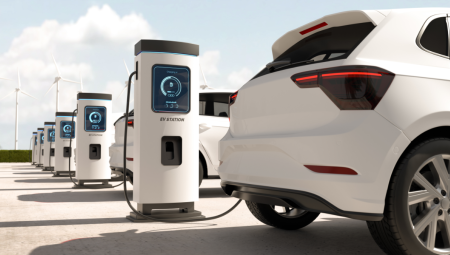
Bogota. The Colombian automotive sector closed 2025 with historic figures in the transition to sustainable mobility. According to data from FENALCO and ANDI, the country registered the registration...

Suscribase Gratis
Remember Me
SUBSCRIBE TO OUR ENGLISH NEWSLETTER
SITE SPONSORS


LATEST NEWSLETTER
Monthly Newsletter