
Select your language

Automated vehicle sensor market to grow by 2030, study finds

International. The market for sensors for automated vehicles is expected to reach $19.1 billion by 2030 globally, with a compound annual growth rate of 62.6%, according to a study by MarketsandMarkets™.

The increasing adoption of automated vehicles is leading to increased demand for sensors, such as cameras, radar sensors, and lidar sensors, among others. These sensors are critical for features such as lane keeping, adaptive cruise control, and automated parking, thereby driving the growth of the market.

The software segment is expected to be the fastest-growing, owing to the need for faster and more accurate algorithms and software platforms to detect objects with low latency. Meanwhile, the hardware segment is estimated to maintain a larger share in the market during the forecast period.

North America and Europe are leading technological advancements in this market, with several governments investing in automated driving technologies and encouraging the adoption of advanced driver assistance features.

- Advertising -

The increase in luxury vehicle sales in the region and the demand for advanced automotive safety features will likely positively impact the demand for autonomous vehicle sensors in North America, according to the study.

Today, many automakers are collaborating with automotive software providers to develop automated driving and safety systems. Radar sensors lead the market in value, being used for a variety of safety features, such as automatic emergency braking and blind spot detection.

The continued growth in demand for autonomous vehicles and ADAS safety features is expected to further drive the automated vehicle sensor market in the coming years.

Government initiatives and collaborations with original equipment manufacturers (OEMs) to support autonomous driving testing will further increase the demand for sensors. The demand for automotive sensors in the region is expected to be driven by increasing government regulations mandating the use of advanced safety features in vehicles and the growing awareness and acceptance of the technology among consumers.

The development of new technologies such as V2X (vehicle-to-everything) communication, advanced sensors, and machine learning algorithms, along with increasing partnerships and collaborations between automakers, technology companies, and suppliers to develop and integrate sensor and sensor fusion technologies, is expected to drive the demand for sensors in the region.

The increasing demand for automated vehicles will drive the growth of the market in the coming years. The presence of leading automotive software vendors, such as NVIDIA and Qualcomm, in the region will also drive the demand for sensors for automated vehicles.

No comments

• If you're already registered, please log in first. Your email will not be published.

Leave your comment

In reply to Some User
INA PAACE Automechanika Mexico 2026 announces the largest edition in its history

INA PAACE Automechanika Mexico 2026 announces the largest edition in its history

Mexico. The INA PAACE Automechanika Mexico 2026 fair is preparing to hold the largest and most innovative edition in its history, consolidating itself as the main automotive aftermarket meeting in...

Querétaro strengthens its strategic role in the regional automotive chain

Querétaro strengthens its strategic role in the regional automotive chain

Mexico. The International Automotive Industry Supply Summit (IAISS) 2026 concluded at the Querétaro Congress Center, consolidating itself as one of the most relevant meetings for the automotive and...

Continental to build highly automated warehouse in Illinois

Continental to build highly automated warehouse in Illinois

United States. The company announced the construction of a new highly automated warehouse for finished products in Mount Vernon, Illinois, United States, as part of its strategy to grow and...

Frankfurt's first traffic light turns 100 and marks the way towards connected mobility

Frankfurt's first traffic light turns 100 and marks the way towards connected mobility

Germany. A century ago, Frankfurt installed its first traffic light, a milestone that marked the beginning of electric traffic control and that today reflects the evolution towards smarter,...

New repair solution for electric power steering avoids complete rack replacement

New repair solution for electric power steering avoids complete rack replacement

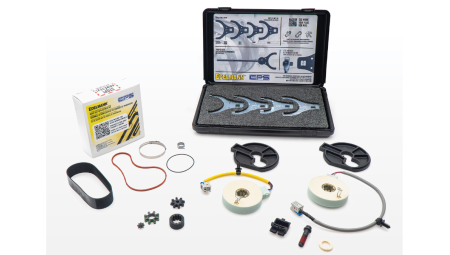
United States. Plews & Edelmann has introduced a new repair category for electric power steering (EPS) systems, developed to prevent complete rack and pinion replacement in millions of modern...

AMR 2026 closed successfully driving innovation in the automotive market

AMR 2026 closed successfully driving innovation in the automotive market

China. The 74th edition of the Auto Maintenance and Repair Expo 2026 successfully concluded on April 15 in Beijing, consolidating itself as one of the main platforms for the automotive...

Global automotive lighting market to exceed $58 billion by 2036

Global automotive lighting market to exceed $58 billion by 2036

International. The global automotive lighting market continues to consolidate itself as a strategic component within vehicle development, driven by electrification, digitalization and the growing...

ACPN opens call for applications for Leadership 2.0 scholarship aimed at aftermarket professionals

ACPN opens call for applications for Leadership 2.0 scholarship aimed at aftermarket professionals

United States. The Aftermarket Content Professionals Network (ACPN), a community of the Auto Care Association, announced the opening of the call for applications for its Leadership 2.0 scholarship,...

Continental celebrates 20 years of tire production in Camaçari, Brazil

Continental celebrates 20 years of tire production in Camaçari, Brazil

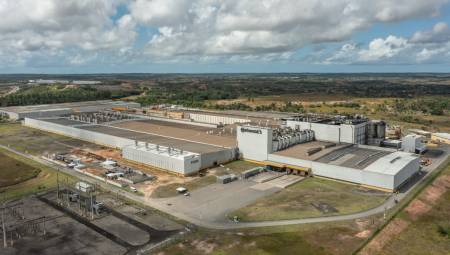
Brazil. The Continental company commemorates the 20th anniversary of its tire production plant in Camaçari, located in the metropolitan region of Salvador, Brazil, consolidating a key milestone for...

Colombia accelerates the adoption of electric vehicles, but faces challenges in charging infrastructure

Colombia accelerates the adoption of electric vehicles, but faces challenges in charging infrastructure

Bogota. The Colombian automotive sector closed 2025 with historic figures in the transition to sustainable mobility. According to data from FENALCO and ANDI, the country registered the registration...

Suscribase Gratis
Remember Me
SUBSCRIBE TO OUR ENGLISH NEWSLETTER
SITE SPONSORS


LATEST NEWSLETTER
Monthly Newsletter